
Bracing for Degenerative Myelopathy
Degenerative Myelopathy Is Inevitable. The Pace of Decline Is Not.
We know what it is to watch your dog's hindquarters fail in slow motion. The diagnosis is real. The grief is real. And so is your power to extend the days they walk beside you.
DM erodes the spinal cord, but inactivity erodes the dog. Published evidence shows dogs receiving structured physiotherapy stay ambulatory roughly five times longer than dogs who rest. The Dynamic Mobility Brace Set delivers that therapy at home, every walk, every day.
Designed by Dr. Huma Pierce DC, Postural Biomechanics Specialist, 25 Years Clinical Experience
Find My Dog's Fit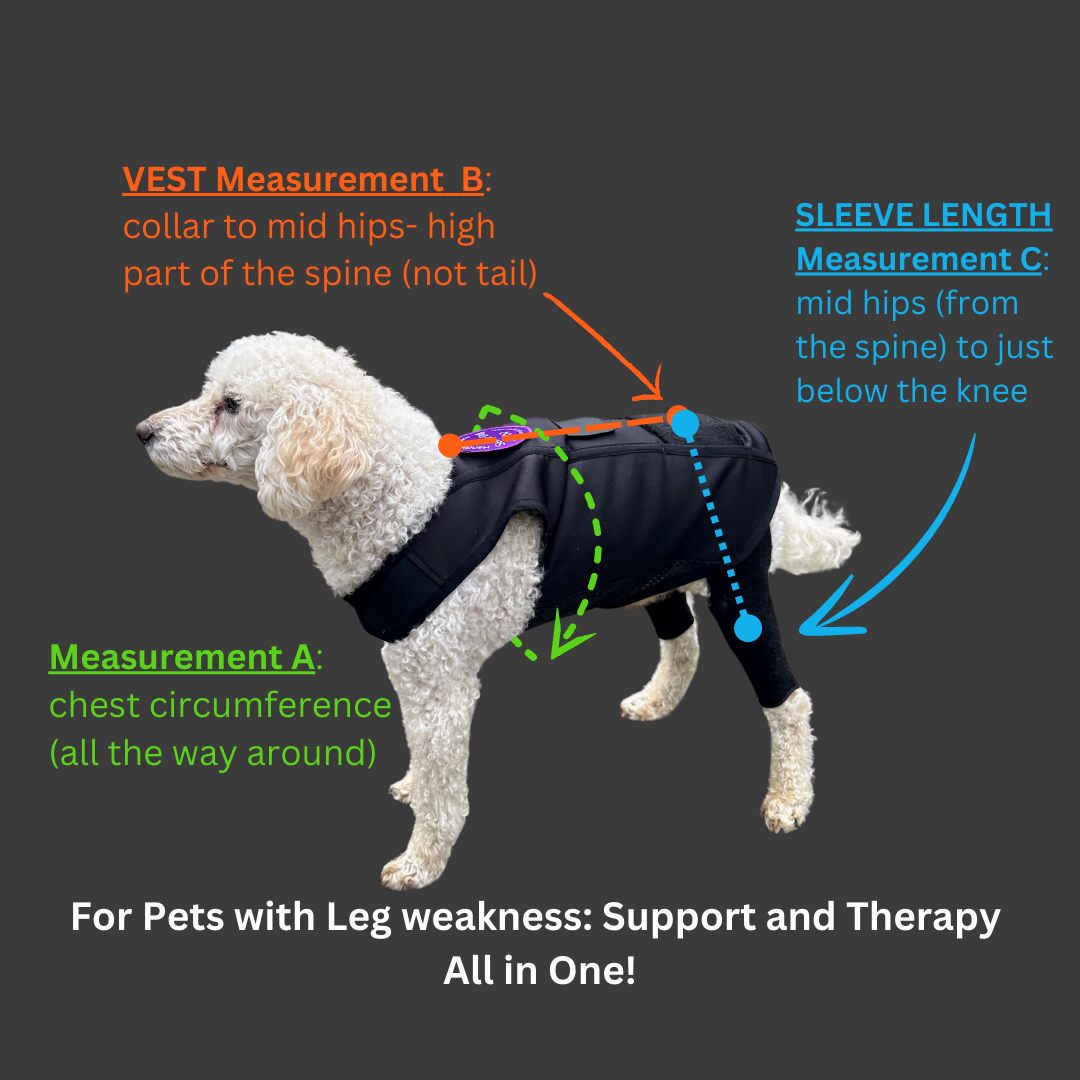
DM Is a Loss of Wiring. Active Movement Preserves What Remains.
When you see your dog's paws drag and their back legs cross, the floor drops out. That instinct to act, to do something, anything, is the right one. We have something.
Degenerative myelopathy is a progressive demyelination of the descending motor tracts in the thoracolumbar spinal cord, most often linked to a mutation in the SOD1 gene. Hindlimb proprioception fails first, followed by motor weakness, ataxia, and ultimately paraplegia. The condition is non-painful, which is why most owners notice the visible signs only after the cascade has begun.
Inactivity accelerates every stage of this cascade. Without sustained, weight-bearing movement, muscle atrophies, surviving neuromuscular pathways downregulate, and the dog becomes non-ambulatory weeks to months sooner than the disease alone would dictate.
Kathmann and colleagues demonstrated that DM dogs receiving daily physiotherapy retained ambulation for a median of 255 days, compared to 55 days for dogs without active intervention. Sustained loading is the most evidence-backed strategy available in canine DM.
Reference: Kathmann et al., Daily Controlled Physiotherapy Increases Survival Time in Dogs with Suspected Degenerative Myelopathy, Journal of Veterinary Internal Medicine.

Dr. Huma Pierce DC
The Dynamic Mobility Brace Set: How It Helps
This is not a compression wrap. It is a two-piece active therapy system built from aerospace-grade bio-responsive materials and 25 years of postural biomechanics research. Your dog deserves that level of care.
The vest anchors support across the neck, shoulders, and lumbar spine, the regions DM dogs lose postural control over first. By stabilizing the axial skeleton, it compensates for failing proprioceptive feedback and preserves the dog's ability to coordinate trunk and limbs through the gait cycle.
DM dogs lose hindlimb position sense before they lose strength. The patented spring sleeves deliver continuous proprioceptive input to each limb during movement, helping the brain re-engage the pathways that still function. This is the same principle used in human spinal cord rehabilitation.
DM responds to dose. The more weight-bearing, coordinated movement your dog gets, the longer they remain ambulatory. The brace turns ordinary backyard walks into therapy sessions, no clinic visits, no scheduled rehab, no missed days.
"In 99% of dogs that can still get up, we see a measurable and marked change for the better. Your dog worked hard to be here. Let us help them keep going."
Your Dog Is a Candidate If They Present With:
If you have heard the words 'degenerative myelopathy,' you are already living with the weight of it. The earlier you intervene, the more days your dog walks. Trust that urgency.
These are the early-to-mid stage signs that respond best to dynamic bracing. Once a dog is non-ambulatory, the window for active therapy has narrowed. If your dog still walks, even imperfectly, they are a candidate.
- ✓Knuckling or scuffing of the rear paws, the earliest proprioceptive sign and the most responsive to active input
- ✓Worn toenails on the hind feet, evidence of dragging during normal gait
- ✓Hindlimb weakness, swaying, or wobble when standing, motor cortex no longer compensating effectively
- ✓Crossed hind legs while walking or difficulty turning, ataxia from proprioceptive failure
- ✓Recently diagnosed or SOD1-positive but still ambulatory, the optimal window to begin
Not sure if your dog qualifies? Email Dr. Pierce: admin@LuckyandLoyal.com. She will respond, assess, and give you recommendations you may not have thought of.

DM Is Progressive. Decline Is Not a Schedule. Set the Pace.
You found this page because the diagnosis did not stop you. It made you fight harder. That is the kind of dog parent we built this for.
The Dynamic Mobility Brace Set is the only self-propelled home device that delivers eccentric resistance and proprioceptive feedback during normal activity, the two interventions with the strongest evidence in canine DM. Start now. Every day matters.
Find the Right Brace